VPS Hosting Explained: A Complete Guide to Virtual Private Servers in 2026
Learn what VPS hosting is, how it works, and why it offers the perfect balance between performance, control, and affordability for websites and businesses in 2026.
 john
john

VPS Hosting Explained: A Complete Guide to Virtual Private Servers in 2026
In 2026, businesses and developers need hosting solutions that offer more power and flexibility than shared hosting, but without the high cost of dedicated servers. This is exactly where VPS Hosting (Virtual Private Server) becomes the ideal solution.
VPS hosting provides dedicated resources inside a virtual environment, giving users more control, better performance, and improved security.
What Is VPS Hosting?
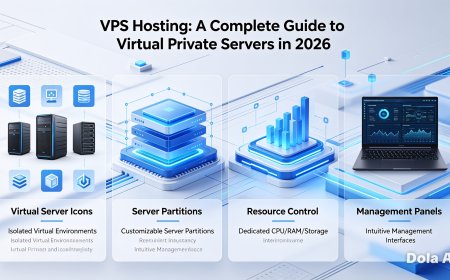
VPS (Virtual Private Server) hosting is a type of hosting where a physical server is divided into multiple virtual servers using virtualization technology.
Each VPS works independently and includes:
- Dedicated CPU allocation
- Dedicated RAM
- Separate storage space
- Own operating system
- Root access (in most cases)
Even though multiple users share the same physical machine, each VPS operates like an independent server.
How VPS Hosting Works
VPS hosting uses a technology called a hypervisor, which splits a physical server into multiple isolated environments.
This ensures:
- No resource interference between users
- Stable performance
- Secure separation of accounts
- Custom configuration per server
Each VPS behaves like a mini dedicated server.
Benefits of VPS Hosting
1. Better Performance
VPS hosting provides consistent performance because resources are allocated individually.
You get:
- Faster loading speeds
- Stable website performance
- Better handling of traffic spikes
2. Full Control and Customization
With VPS hosting, you can:
- Install custom software
- Configure server settings
- Choose operating systems
- Manage security rules
This makes it ideal for developers and advanced users.
3. Improved Security
Since each VPS is isolated, security risks are reduced.
Benefits include:
- Server isolation
- Custom firewall rules
- Secure environments
- Reduced risk from other users
4. Scalability
VPS hosting allows easy upgrades:
- More CPU power
- Additional RAM
- Increased storage
- Higher bandwidth
This supports business growth without migration issues.
5. Cost-Effective Solution
VPS hosting offers a balance between price and performance.
It is:
- Cheaper than dedicated servers
- More powerful than shared hosting
- Ideal for growing websites
VPS Hosting vs Shared Hosting
| Feature | Shared Hosting | VPS Hosting |
|---|---|---|
| Performance | Low | High |
| Resources | Shared | Dedicated |
| Security | Basic | Advanced |
| Control | Limited | Full |
| Scalability | Low | High |
VPS Hosting vs Cloud Hosting
- VPS = Single physical server divided into virtual servers
- Cloud = Multiple connected servers working together
Cloud hosting is more scalable, while VPS offers more predictable performance.
Types of VPS Hosting
1. Managed VPS Hosting
Provider handles updates, security, and maintenance.
2. Unmanaged VPS Hosting
User manages everything, ideal for developers.
3. Windows VPS Hosting
Runs Windows OS, suitable for specific applications.
4. Linux VPS Hosting
Most popular option, flexible and stable.
Who Should Use VPS Hosting?
VPS hosting is perfect for:
- Growing websites
- E-commerce stores
- Developers
- SaaS applications
- Medium-sized businesses
- High-traffic blogs
SEO Benefits of VPS Hosting
VPS hosting can improve SEO through:
- Faster page loading speed
- Better uptime reliability
- Improved Core Web Vitals
- Stronger user experience
- Reduced bounce rates
Features to Look for in VPS Hosting
When choosing a VPS provider, consider:
- SSD/NVMe storage
- Dedicated resources
- Root access
- DDoS protection
- Daily backups
- 24/7 support
- Scalable plans
Future of VPS Hosting in 2026
VPS hosting continues to evolve with:
- AI-based server optimization
- Automated security systems
- Hybrid cloud integration
- Faster NVMe infrastructure
- Improved virtualization technology
Conclusion
VPS hosting remains one of the most popular hosting solutions in 2026 because it offers the perfect balance of performance, control, and affordability.