Cloud Hosting vs VPS Hosting: Which Solution Is Better for Your Business in 2025?
Compare Cloud Hosting and VPS Hosting to discover which solution offers better performance, scalability, security, and value for growing websites and businesses in 2025.
 john
john

Cloud Hosting vs VPS Hosting: Which Solution Is Better for Your Business in 2025?
Choosing the right hosting solution is one of the most important decisions for any website owner. As businesses demand greater performance, reliability, and scalability, two hosting options consistently dominate the market: Cloud Hosting and VPS Hosting.
While both offer significant advantages over traditional shared hosting, understanding their differences can help you select the best infrastructure for your website, application, or online business.
What Is VPS Hosting?
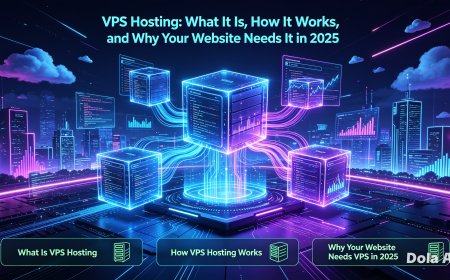
VPS Hosting (Virtual Private Server Hosting) uses virtualization technology to divide a physical server into multiple independent virtual servers.
Each VPS receives:
- Dedicated CPU resources
- Dedicated RAM
- Private storage
- Custom operating system
- Root access
Although multiple VPS instances share one physical machine, each operates independently.
This makes VPS Hosting an affordable and powerful solution for growing websites.
What Is Cloud Hosting?
Cloud Hosting uses a network of interconnected servers rather than a single physical machine.
Resources are distributed across multiple servers, providing:
- High availability
- Automatic failover
- Elastic scalability
- Load balancing
- Improved redundancy
If one server experiences an issue, another server within the cloud network can continue serving your website.
Key Differences Between Cloud Hosting and VPS Hosting
Infrastructure
VPS Hosting
A VPS operates within a single physical server.
Advantages include:
- Predictable performance
- Dedicated resources
- Lower cost
- Easy management
Cloud Hosting
Cloud environments utilize multiple servers simultaneously.
Advantages include:
- Redundancy
- High availability
- Dynamic resource allocation
- Enterprise-level scalability
Performance Comparison
Performance is a critical factor for website owners.
VPS Hosting Performance
VPS hosting delivers strong performance for:
- Business websites
- Blogs
- Online stores
- Small SaaS applications
Since resources are dedicated, users enjoy stable performance.
Cloud Hosting Performance
Cloud hosting excels when handling:
- Large traffic spikes
- High-demand applications
- Enterprise workloads
- Global audiences
The ability to distribute workloads across multiple servers gives cloud hosting a performance advantage for large-scale operations.
Scalability Comparison
VPS Hosting Scalability
VPS plans can be upgraded by increasing:
- RAM
- CPU
- Storage
- Bandwidth
However, scalability may be limited by the physical server's capacity.
Cloud Hosting Scalability
Cloud hosting is designed for nearly unlimited scalability.
Resources can often be adjusted instantly without downtime.
This flexibility makes cloud hosting ideal for rapidly growing businesses.
Security Comparison
Security remains a major concern for modern websites.
VPS Hosting Security
Benefits include:
- Server isolation
- Custom firewall rules
- Dedicated resources
- Root-level access controls
Cloud Hosting Security
Cloud platforms typically provide:
- Distributed security systems
- Automatic backups
- Redundant infrastructure
- Disaster recovery solutions
Both options offer strong protection when properly configured.
Reliability and Uptime
VPS Hosting
Reliability depends largely on a single physical server.
If hardware fails, downtime may occur.
Cloud Hosting
Cloud infrastructure is built for redundancy.
Benefits include:
- Automatic failover
- Multiple server locations
- High uptime guarantees
- Reduced risk of outages
For mission-critical applications, cloud hosting generally provides superior reliability.
Cost Comparison
VPS Hosting
Average monthly pricing:
- Entry-level VPS: $5–$20
- Business VPS: $20–$80
- Premium VPS: $80–$200
VPS hosting is typically more affordable.
Cloud Hosting
Average monthly pricing:
- Small cloud instances: $10–$50
- Business cloud solutions: $50–$300
- Enterprise deployments: $300+
Cloud hosting often uses pay-as-you-go pricing models.
SEO Benefits of Both Hosting Solutions
Search engines prioritize websites that deliver excellent user experiences.
Both VPS and cloud hosting can improve:
Website Speed
Fast-loading pages contribute to higher rankings.
Uptime
Consistent availability helps maintain search visibility.
User Experience
Reliable hosting reduces bounce rates and increases engagement.
Core Web Vitals
Better server performance supports Google's ranking signals.
Who Should Choose VPS Hosting?
VPS Hosting is ideal for:
- Small businesses
- Medium-sized websites
- Bloggers
- Freelancers
- Developers
- Growing online stores
It offers excellent performance without enterprise-level costs.
Who Should Choose Cloud Hosting?
Cloud Hosting is best for:
- Large businesses
- SaaS companies
- Enterprise websites
- High-traffic applications
- Global platforms
- Rapidly scaling businesses
Its flexibility and reliability make it perfect for demanding environments.
Common Features to Look For
Whether choosing VPS or Cloud Hosting, look for:
- NVMe SSD storage
- DDoS protection
- Daily backups
- 24/7 support
- SSL certificates
- Control panel access
- Multiple operating systems
- Scalable resources
These features contribute to long-term performance and security.
Future of Hosting in 2025
The hosting industry continues evolving through:
- Artificial Intelligence optimization
- Edge computing
- Enhanced cybersecurity
- Green hosting initiatives
- Automated infrastructure management
- Hybrid cloud deployments
Businesses adopting modern hosting solutions today gain a competitive advantage in tomorrow's digital landscape.
Conclusion
Both Cloud Hosting and VPS Hosting offer substantial advantages over traditional shared hosting. VPS hosting provides excellent performance, affordability, and control, making it ideal for growing businesses. Cloud hosting delivers unmatched scalability, reliability, and flexibility for organizations with demanding workloads.